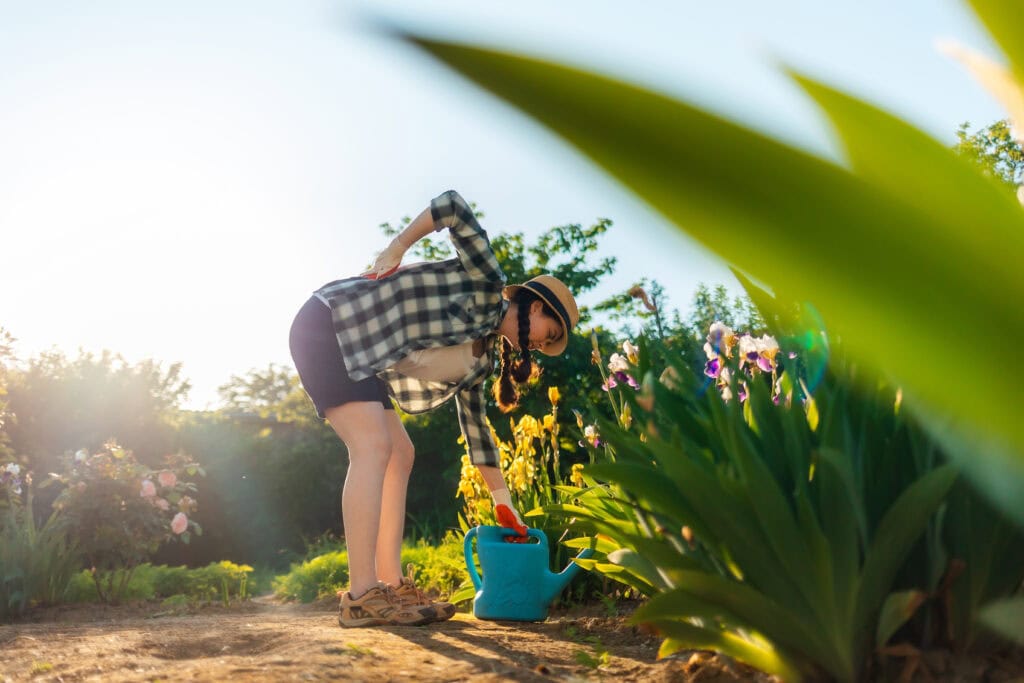
Why gardening leaves you aching and how to prevent it
I love this time of year. The minute the weather turns, it’s hard to ignore the garden any longer. There’s always more to do than you think. Digging, weeding, and tackling all the bits that have been left a little too long, often followed by those familiar gardening aches and pains
Gardening has a funny way of reminding you when it’s been a while. What you managed for hours last summer can suddenly leave you stiff, sore, and moving like you’ve borrowed someone else’s back.
You’re not alone. So let’s look at what’s actually happening in your body, why it matters, and what you can do about it.
WHY DO GARDENING ACHES AND PAINS HURT SO MUCH?
Gardening is a full-body workout that disguises itself as pottering. You’re bending, kneeling, squatting, reaching, gripping, and twisting often for hours, often in positions your body simply hasn’t been in since the end of last summer.
The most common trouble spots are the lower back (from bending and digging), the neck and upper shoulders (from peering down at flower beds), the knees (from kneeling on hard ground), the hips (from sustained awkward postures), and the hands and wrists (from all that gripping, weeding, and pruning).
Even if you’re an active person, those specific gardening movements use muscles and joints in ways they haven’t been asked to work, often for months. It’s the gardening equivalent of running a 5k you haven’t trained for, and your body will let you know about it.
WHAT CAN YOU DO TO LOOK AFTER YOURSELF?
A few simple things can make a real difference. Before you start, spend five minutes warming up; walk around, do some gentle hip circles, roll your shoulders, stretch your calves. It sounds obvious, but so many of us go straight from breakfast to the spade.
Try to change position every 20 to 30 minutes. If you’ve been bending, stand up and reach back gently. If you’ve been kneeling, walk around for a bit. Your body doesn’t like being held in one position for too long, especially when it’s also working hard.
Kneel properly when you need to. A kneeling pad can make a genuine difference to your knees and hips. And think about your tools: long-handled options mean less bending, and ergonomic grips reduce strain on your hands and wrists.
After you’ve finished, do some gentle stretching. Your hip flexors, lower back, and hamstrings will all thank you. And if something’s aching, a warm bath with Epsom salts is a lovely way to help your muscles relax and recover. The magnesium in the salts can help ease that post-gardening soreness.
WHERE DOES MASSAGE COME IN?
Massage can be genuinely helpful for gardening-related aches and pains; not just as a treat, but as a real part of recovery.
When muscles have been working hard and are now tight and sore, hands-on treatment can help release that tension, improve circulation to the area, and reduce the stiffness that makes it hard to move freely. For lower back pain especially, massage alongside some gentle movement can make a significant difference in how quickly you bounce back.
As prevention is better than a cure, a regular massage during the gardening season will help keep your muscles in better shape, so you’ll recover faster between sessions and are less likely to pick up a more serious strain. Think of it like servicing your car, much better to maintain things than wait until something breaks.
If you’ve been out in the garden and you’re now suffering, don’t just push through it. Whether it’s a tight lower back, a grumbling shoulder, or aching hands from too much weeding, get in touch and we can work out what’s going on and get you moving freely again.
Got questions about gardening aches or want to book a treatment? Either book an appointment online or drop me a message – I’d love to help you enjoy your garden without the pain.